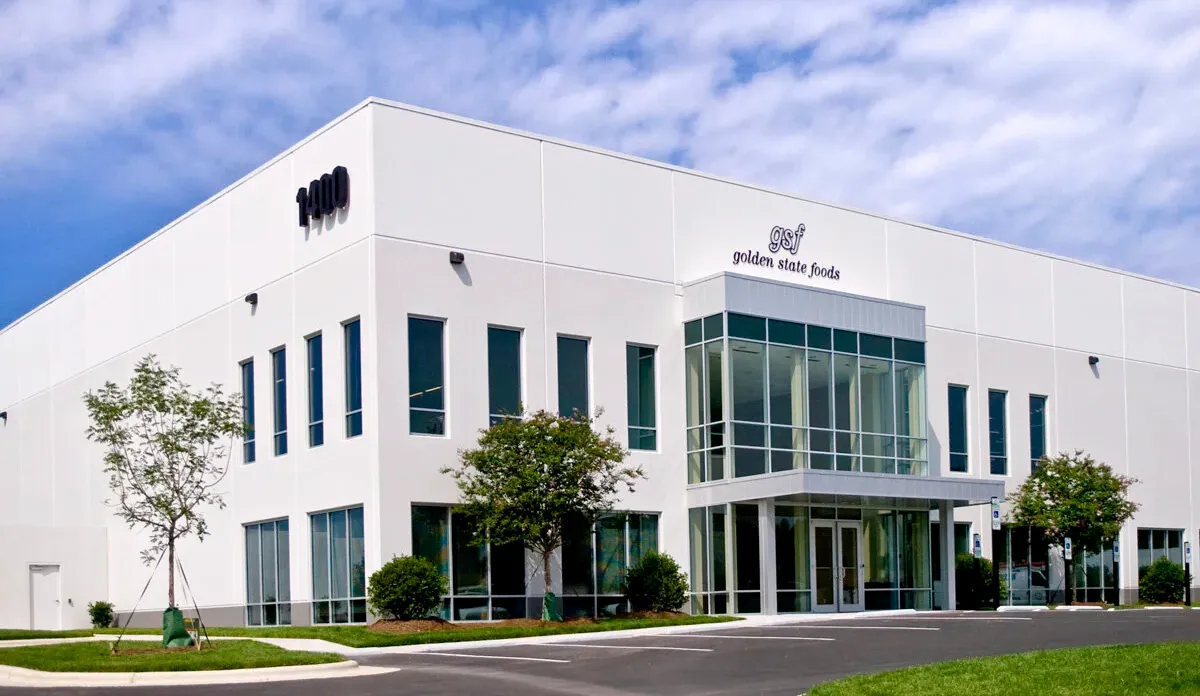
Golden State Foods LMS Modernization Preserves Critical Training Data for a 6,000+ Employee Global Workforce
The Client Profile
- Industry: Food Manufacturing, Distribution & Foodservice
- Use Case: LMS Modernization & Learning Data Migration
- Headquarters: Irvine, California
- Workforce: 6,000+ associates
- Global Footprint: 47+ locations
Golden State Foods (GSF) is one of the world’s largest diversified suppliers to the quick-service restaurant and retail industries. Headquartered in Irvine, California, the company provides food manufacturing, distribution, logistics, and related supply-chain services through a global operation spanning 47+ locations and more than 6,000 associates. With a large, geographically dispersed workforce supporting complex manufacturing and distribution operations, learning and employee training play an important role in maintaining consistency across the organization.
As Golden State Foods modernized its learning technology, the company needed to move critical employee and training information from its legacy learning environment into Docebo—without losing the historical records its teams relied on.
The Challenge
Modernizing the LMS Without Leaving Critical Training History Behind
Replacing a legacy learning management system involves more than implementing a new platform. Years of employee learning history, user information, course records, enrollments, and completion data can live inside the system being replaced.
For Golden State Foods, that information represented the training history of a workforce of more than 6,000 associates. Simply launching a new LMS without properly migrating that data could leave the organization with incomplete learner histories and limited visibility into training that had already occurred.
The migration presented several challenges:
- Historical user and learning records needed to be preserved.
- Legacy data structures needed to be mapped to Docebo.
- Existing information needed to be cleaned and standardized before migration.
- Learner profiles needed to remain connected to the appropriate historical learning records.
- Migrated information needed to be validated before the new LMS could become a reliable system of record.
Rebuilding thousands of records manually would introduce significant administrative effort and increase the possibility of missing, duplicated, or incorrectly mapped information. Golden State Foods needed a structured way to move its learning history forward while establishing a cleaner foundation for its new LMS.
The Solution
Migrating Legacy Learning and User Data Into Docebo
Quandary developed and executed a structured data migration process to move Golden State Foods’ historical learning and user information from its legacy LMS environment into Docebo. The process began by identifying the data that needed to move and determining how existing records corresponded with the structure of the new platform.
Mapping Legacy Data to the New LMS
Legacy systems and modern LMS platforms do not always organize information the same way. Quandary mapped existing user and learning data to the appropriate fields and structures within Docebo, creating a clear path between the old and new environments.
This helped preserve the relationships between employees and their historical learning activity instead of simply transferring disconnected records.
Cleaning and Transforming Historical Records
Before migration, legacy data could be standardized and transformed to align with the requirements of the new LMS. This process helped create more consistent records and reduced the risk of carrying unnecessary data-quality problems into the new environment.
Migrating Learner Histories at Scale
Once the information was mapped and prepared, learner profiles and associated learning records could be migrated into Docebo programmatically rather than recreated manually. For an organization with more than 6,000 associates, this provided a significantly more scalable approach to LMS modernization.
Validating the New Learning Environment
Migration was not complete simply because information had been transferred. The migrated records needed to be reviewed and validated to help ensure historical learning information remained complete, usable, and associated with the appropriate learners in Docebo. The result was a modern LMS environment that could move forward without abandoning the valuable training history stored in the legacy system.
The Results
Historical Learning Records Preserved
Golden State Foods was able to transition to Docebo while retaining critical historical workforce learning information. Instead of beginning with an empty LMS, the organization could move forward with existing learner histories available within its modern learning environment.
6,000+ Associates Supported
The migration established a centralized learning-data foundation capable of supporting a workforce of more than: 6,000 associates. Rather than manually rebuilding employee training histories, historical information could be migrated systematically into the new platform.
Reduced Manual Migration Effort
Automating and structuring the migration process eliminated the need to manually recreate large volumes of historical learner information.
For an organization operating at this scale, that meant avoiding potentially significant administrative effort while reducing the risks associated with manual data entry.
A More Scalable Learning Foundation
With historical information centralized in Docebo, Golden State Foods established a stronger foundation for managing workforce learning moving forward. The organization could modernize its learning technology without sacrificing the historical data accumulated in its previous LMS environment.
The Impact
Moving from a legacy LMS to a modern learning platform can create an uncomfortable tradeoff: adopt better technology or preserve years of historical information. Golden State Foods didn’t have to choose.
By systematically extracting, mapping, transforming, migrating, and validating its existing learning data, the organization could preserve important workforce training history while establishing a modern LMS foundation built for its global operations.
- 6,000+ Associates supported by the learning environment
- 47+ Locations across a global operation
- Centralized historical learning and user data within Docebo
- Preserved critical learner and training history during LMS modernization
The project demonstrates that successful LMS modernization isn't simply about deploying a new platform. The value lies in ensuring the information an organization has accumulated over years of employee learning remains usable after the technology changes.
For Golden State Foods, that meant moving critical workforce learning history forward while creating a more scalable foundation for the future.
Our Latest Projects


Services
Industries
© 2026 Quandary Consulting Group. All Rights Reserved.
Privacy Policy