Gateway Terminals Consolidated 18 Legacy Systems into a Single Custom Terminal Operations ERP using Quickbase
The Client Profile: Gateway Terminals
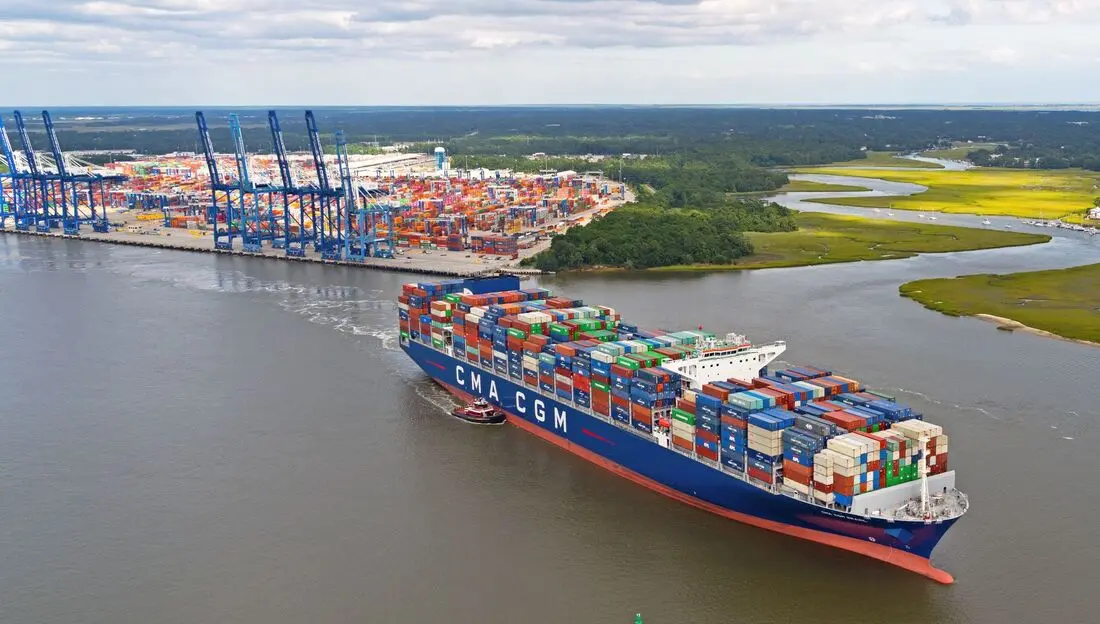
Gateway Terminals LLC is a Savannah, Georgia-based stevedoring and marine terminal operations company providing container terminal operations, truck and rail gate services, cargo handling, and stevedoring services at the Port of Savannah. Established in 2022, Gateway Terminals brought together the Savannah operations and expertise of Ports America, Ceres Marine Terminals, and SSA Atlantic under a single joint venture. The consolidation was designed to streamline terminal operations and support the continued growth of the Georgia Ports Authority and Port of Savannah, one of the busiest container port complexes in the United States.
Gateway's responsibilities extend across critical components of port operations, including loading and unloading container vessels, coordinating longshore labor, planning vessel stowage, managing container movement, overseeing cargo handling safety, supporting truck and rail gate activity, and providing breakbulk stevedoring services.
Operating within a high-volume port environment means Gateway must coordinate people, equipment, vessels, containers, gates, and financial processes with extraordinary precision. As the newly formed organization brought three established operations together under one umbrella, creating a unified technology and operational foundation became critical to supporting greater efficiency, scalability, and visibility across the business.
The Challenges
Gateway Terminals Inherited 18 Disconnected Systems With No Unified Operational Control
The creation of Gateway Terminals brought together three established Savannah port operations—Ports America, Ceres Marine Terminals, and SSA Atlantic—with an opportunity to operate as one coordinated organization; but bringing the businesses together operationally also meant bringing together their technology.
Gateway inherited 18 disconnected legacy systems supporting different aspects of terminal operations. Each legacy organization had developed its own applications, processes, workflows, data structures, and reporting practices. What had previously existed as separate operating environments now needed to function as one connected port operation and without a unified port and terminal operations management platform, coordinating labor, equipment, cargo movement, vessel schedules, gate activity, billing, and reporting required employees to move between disconnected systems and manually reconcile information before making critical operational decisions.
Teams relied heavily on spreadsheets, phone calls, manual tracking, and separate applications to:
- Coordinate container movement and cargo handling
- Schedule and manage union labor crews
- Track equipment availability, assignments, and usage
- Monitor vessel activity and terminal operations
- Coordinate truck and rail gate activity
- Compile operational and management reports
- Prepare billing information and reconcile completed work
The fragmentation affected more than administrative efficiency. In a high-volume marine terminal environment, delays in information can influence vessel turnaround, labor utilization, equipment deployment, gate capacity, cargo throughput, billing, and ultimately customer service. Routine reports could take days to compile, while billing cycles could extend beyond a week, creating unnecessary administrative work and delaying the organization's ability to convert completed operational activity into billable revenue. Also, Gateway needed to replace that fragmented environment with a centralized, scalable port operations ERP platform capable of connecting its newly consolidated organization.
The new environment needed to unify workflows across terminal operations, provide real-time operational dashboards, automate labor scheduling and billing processes, centralize operational data, and give leadership greater visibility into activity across the organization. Just as importantly, modernization could not come at the expense of daily operations. Vessels still needed to be loaded and unloaded. Containers still needed to move. Labor still needed to be coordinated. Trucks still needed to pass through the gates. Customers still needed to be served.
The challenge was therefore much larger than replacing outdated software: Gateway Terminals needed to consolidate 18 disconnected systems into one connected operational environment while keeping mission-critical Port of Savannah operations moving.
The Client Profile:
A stevedoring and port services provider operating at one of the busiest container ports in the United States. The client manages vessel operations, cargo handling, and gate services across multiple terminals.
The Challenge
18 Disconnected Systems and No Unified Operational Control
Following the merger of three port operators, the organization inherited 18 disconnected legacy systems with limited integration, scalability, and centralized governance. Each terminal relied on its own tools, workflows, and reporting processes, creating operational silos and preventing enterprise-wide visibility.
Without a unified port operations platform, coordinating labor, equipment, cargo movement, and vessel schedules became increasingly complex. Teams had to manually reconcile information across multiple systems before making critical decisions, slowing execution and increasing the risk of errors.
Operational teams relied heavily on spreadsheets, phone calls, and manual tracking to:
- Coordinate container movement across terminals
- Schedule union labor crews
- Manage equipment availability and usage
- Monitor cargo flow, vessel activity, and gate operations
Routine reports took days to compile, while billing cycles extended beyond a week—delaying revenue recognition and increasing administrative costs. Operational bottlenecks also affected vessel turnaround times, constrained yard and gate capacity, and reduced terminal throughput.
Leadership recognized that the fragmented technology environment could no longer support high-volume port operations. The organization needed a centralized, scalable ERP platform capable of:
- Unifying workflows across terminals
- Delivering real-time operational dashboards
- Automating billing and labor scheduling
- Supporting faster, data-driven decisions
- Modernizing operations without interrupting vessel activity
The challenge was not simply replacing outdated technology. It was consolidating 18 systems into one connected operational environment while keeping mission-critical port operations running.
The Solutions
Agile Modernization Focused on Operational Bottlenecks
Quandary implemented the new port operations ERP through structured two-week development sprints. Each sprint focused on the workflows creating the greatest operational friction, allowing the organization to realize measurable improvements throughout the implementation. Client stakeholders remained closely involved—testing releases, validating workflows, and shaping functionality based on real-world terminal operations.
Comprehensive Operational Discovery
Quandary assessed the organization’s infrastructure, data flows, workflows, and system dependencies to identify bottlenecks across vessel operations, labor coordination, cargo tracking, reporting, and billing.
Strategic Legacy-System Evaluation
Rather than recreating every legacy process, we evaluated which capabilities should be retained, redesigned, consolidated, or eliminated. This reduced implementation risk, prevented outdated processes from carrying into the new platform, and accelerated modernization.
Collaborative Quickbase ERP Development
Every module was developed with input from field operators, supervisors, dispatchers, finance teams, and executive leadership. This collaborative approach ensured the platform reflected actual operating conditions across terminals.
High-Impact Workflow Prioritization
Initial sprints targeted the workflows with the greatest effect on productivity and financial performance, including:
- Production logging and cargo tracking
- Union labor scheduling and workforce coordination
- Operational and compliance reporting
- Billing and financial data processing
Addressing these areas first delivered immediate efficiency gains and built momentum for broader adoption.
Live Validation and On-Site Feedback
Each release was evaluated through live walkthroughs, operational simulations, and direct user feedback. Quandary refined workflows before expanding the platform, reducing implementation risk and improving usability.
Adaptive Module Expansion
New modules and enhancements were prioritized according to actual usage patterns and evolving business requirements. This ensured the ERP remained practical, scalable, and aligned with day-to-day port operations. and through continuous iteration and operational validation, Quandary consolidated 18 fragmented systems into a scalable Quickbase ERP—improving coordination and visibility without disrupting critical vessel activity.
Technology Stack Powering Gateway Terminals' Port Operations Modernization
Gateway Terminals' modernization strategy was built around a connected technology ecosystem rather than a collection of standalone applications. Quickbase served as the operational core, while Microsoft Azure, peakSUITE, Oracle NetSuite, TCP Software, and Microsoft Power BI connected specialized capabilities across integration, finance, workforce management, document generation, and executive reporting.
Quickbase: Core Port Operations ERP Platform
Quickbase became the centralized operational platform supporting critical workflows across Gateway Terminals, including union labor scheduling, vessel operations, cargo activity, asset and equipment tracking, billing, and vehicle maintenance. Quickbase's low-code architecture gave Gateway a flexible alternative to a rigid traditional ERP system. Workflows could be developed around the realities of terminal operations, enhanced as requirements evolved, and automated without rebuilding the underlying platform. Most importantly, Quickbase provided the common operational layer needed to replace fragmented processes with connected workflows and centralized data.
Microsoft Azure: Secure Integration Infrastructure
Microsoft Azure provided the cloud-based integration infrastructure connecting Gateway's operational platform with other systems across the technology environment. Azure supported secure data movement and synchronization between applications, helping information flow reliably across Gateway's operational, workforce, reporting, and financial systems. This integration layer reduced dependence on manual data transfers while providing the scalability, security, and governance required for enterprise port operations.
peakSUITE: Automated Terminal Operations Reporting
peakSUITE automated the generation of Terminal Operations Reports using current data captured within the operational environment. Instead of employees manually assembling and formatting recurring reports, operational information could be transformed into standardized documents more efficiently. This reduced administrative effort, improved reporting consistency, and gave Gateway a more reliable process for producing important operational documentation.
Oracle NetSuite: Connecting Port Operations With Financial Processes
Integration with Oracle NetSuite connected operational activity with Gateway's downstream financial processes. Data generated through terminal operations could flow into the financial environment without employees repeatedly re-entering the same information. This reduced duplicate data entry, improved financial accuracy, and helped accelerate the transition from completed operational activity to billing and invoicing.
TCP Software: Connecting Labor Scheduling With Time and Attendance
For a port operator dependent on carefully coordinated union labor, workforce information needed to remain connected to daily terminal activity. Integration with TCP Software connected time-and-attendance information with union labor scheduling workflows, providing greater visibility into scheduled and worked labor. This helped Gateway improve workforce coordination, strengthen payroll accuracy, and better understand labor utilization at the shift and operational level.
Microsoft Power BI: Executive Analytics and Operational Visibility
Microsoft Power BI transformed centralized operational data into interactive dashboards and executive reporting; leadership could gain clearer visibility into key areas such as vessel activity, workforce utilization, terminal throughput, equipment activity, and billing performance. This gave decision-makers a more timely view of operations and helped turn the data captured throughout Gateway's workflows into actionable business intelligence.
One Connected Technology Ecosystem for Port Operations
Together, these technologies created an integrated architecture connecting: Terminal Operations → Union Labor → Equipment & Assets → Time & Attendance → Billing & Finance → Operational Reporting → Executive Analytics
- Quickbase provided the centralized operational foundation
- Microsoft Azure connected systems and data
- TCP Software supported workforce and timekeeping processes.
- Oracle NetSuite connected operations with finance.
- Quandary's Quickbase Product, peakSUITE automated operational documents.
- Microsoft Power BI transformed the resulting data into executive intelligence.
The result was not simply a new collection of applications. Gateway Terminals created a connected port operations technology ecosystem capable of supporting day-to-day terminal activity while providing the automation, integration, financial visibility, and operational intelligence required to scale.
The Results
Quickbase Became the Central Operating System for Gateway Terminals
At the center of Gateway Terminals' modernization was Quickbase, which evolved into the centralized operational platform connecting workflows that had previously been distributed across legacy systems, spreadsheets, emails, and manual processes. Rather than forcing Gateway's complex port operations into a rigid, traditional ERP structure, Quandary Consulting Group used Quickbase to create a flexible port operations ERP and workflow management environment designed around the way Gateway actually operates.
Quickbase centralized critical processes across vessel operations, union labor scheduling, cargo activity, equipment and asset tracking, vehicle maintenance, billing workflows, and operational reporting. Employees could work from a shared environment while integrations connected operational data with Gateway's workforce, financial, document generation, and analytics systems.
The platform also gave Gateway the flexibility to continue improving workflows as operational requirements changed. New functionality, process enhancements, business rules, and automations could be introduced without replacing the underlying system or undertaking another large-scale ERP implementation.
- Most importantly, Quickbase helped transform Gateway's fragmented technology environment into a connected operational model: Vessel Activity → Labor Scheduling → Cargo Operations → Equipment Usage → Maintenance → Billing → Financial Systems → Reporting
By establishing Quickbase as the central operational layer connecting people, processes, and data, Gateway gained a scalable foundation for managing increasingly complex terminal operations while reducing the manual coordination that had previously existed across its technology environment. This meant Gateway wasn't simply replacing 18 disconnected systems with another piece of software. It was creating a centralized Quickbase port operations platform capable of connecting and orchestrating the workflows required to run the business.
Billing Cycles Reduced From 7–10 Days to Less Than 48 Hours
One of the most significant improvements came from connecting terminal operations directly with downstream billing and financial processes. Previously, employees could spend 7–10 days collecting, validating, reconciling, and preparing operational information before billing could be completed. With operational data centralized and integrated with Oracle NetSuite, Gateway reduced that cycle to less than 48 hours.
That represents an approximately 70%–80% reduction in billing cycle time, helping Gateway invoice completed work faster, reduce administrative effort, and accelerate the conversion of terminal activity into recognized revenue.
Union Labor Scheduling and Time Entry Became One Connected Process
Gateway also centralized critical workforce processes surrounding union labor scheduling and timekeeping; instead of coordinating labor requirements and worked time through disconnected processes, scheduling and time-and-attendance information could operate within a connected workflow. Integration with TCP Software gave teams better visibility into scheduled and actual labor while reducing duplicate entry and supporting more accurate payroll and workforce coordination.
For an operation where labor availability must align closely with vessel schedules and terminal demand, that visibility created a stronger connection between workforce planning and daily port activity.
Greater Equipment Accountability Across Terminal Operations
Gateway improved how equipment was assigned, used, and tracked throughout its operations. Supervisors could record equipment usage and AOM activity directly within the platform, while scanner-based check-in and check-out processes created a more reliable record of where equipment was located and who was responsible for it and this increased asset accountability, reduced reliance on manual tracking, and helped minimize unnecessary equipment duplication and loss.
Preventive Maintenance Automated Across Hundreds of Vehicles
The platform also brought greater structure to Gateway's vehicle and equipment maintenance program. Preventive maintenance requirements for hundreds of vehicles could be tracked and triggered systematically rather than relying on employees to manually monitor service schedules and by giving teams greater visibility into maintenance requirements and asset history, Gateway could address service needs proactively, reduce the risk of avoidable downtime, and support longer useful asset life.
Real-Time Operational Intelligence Replaced Days of Manual Reporting
Leadership no longer needed to wait days for teams to compile information from disconnected applications and spreadsheets before understanding operational performance. Centralized data combined with Microsoft Power BI provided dashboards and analytics across areas such as vessel activity, labor utilization, equipment usage, terminal throughput, billing performance, operating periods, and seasonal demand.
Gateway could now identify trends across its operations, compare performance over time, investigate exceptions, and make decisions using current operational information rather than manually assembled historical reports.
The Key Results Delivered:
- 70%–80% faster billing cycles, reducing turnaround from 7–10 days to less than 48 hours
- 18 disconnected legacy systems consolidated into a connected port operations environment
- Centralized union labor scheduling and time entry through integrated workforce workflows
- Hundreds of vehicles supported by automated preventive maintenance, improving maintenance visibility and reducing avoidable downtime
- Greater equipment accountability through scanner-based check-in and check-out tracking
- Reduced duplicate data entry and manual rework through connected operational and financial workflows
- Real-time executive dashboards replacing reporting processes that previously took days to compile
- Greater visibility into vessel, workforce, equipment, billing, and terminal performance
- Historical and seasonal performance analysis supporting more informed workforce and operational planning
Gateway Terminals ultimately moved from an environment defined by 18 disconnected systems and manual coordination to one connected operational ecosystem. By integrating port operations, union labor, equipment management, maintenance, billing, finance, and executive reporting, Gateway created a scalable digital foundation capable of supporting the speed, complexity, and operational demands of one of the nation's busiest container ports.
Our Latest Projects


Services
Industries
© 2026 Quandary Consulting Group. All Rights Reserved.
Privacy Policy